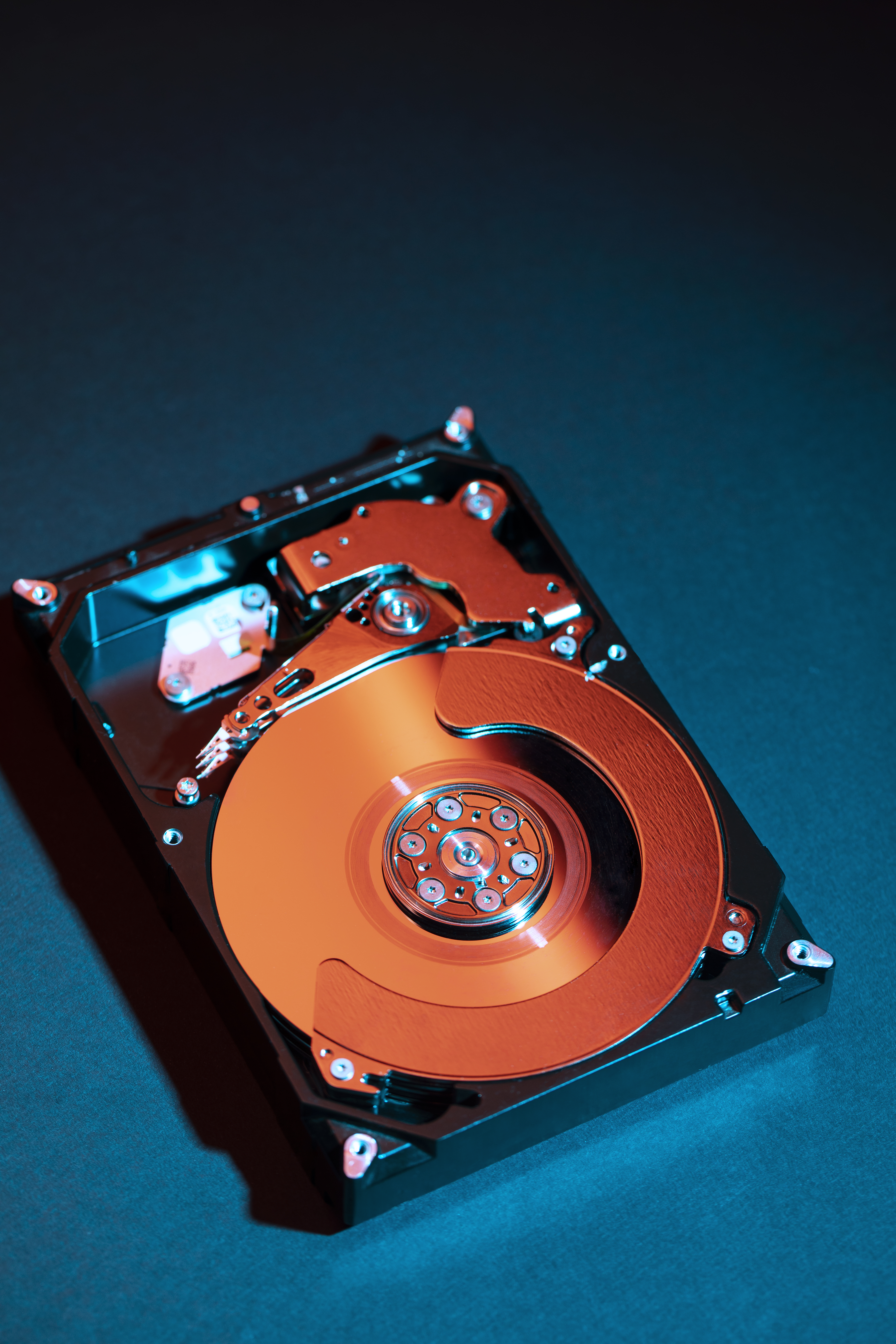
A producer generates an instrumental with an AI tool, then spends hours rearranging sections, adding live elements, and mixing. Is any of it protectable? The arrangement and mix likely are — the raw AI output likely isn't.
AI Music Copyright:
Can You Actually Own It?
AI tools can generate a track in seconds — but who owns it? Here's what US, EU and UK law actually says in 2026, the real cases that set the rules, and how to document the human creativity that makes your AI-assisted music legally yours.
Tezos Blockchain · eIDAS Standard · 170+ countries · 2 minutes · No credit card
Reviewed against U.S. Copyright Office guidance current as of July 2026.
"AI music has no copyright"
is not the full story
The social media takes are wrong in both directions. It's not "AI music is fully protected like anything else" and it's not "AI music has no copyright at all." The real answer depends on how much human creativity went into the track.
⚠️ What most artists get wrong about AI music copyright
"I used AI, so it's not protected"
Wrong if you made real creative choices — wrote lyrics, arranged the structure, selected and edited outputs. Those human contributions can be protected.
"I typed a prompt, so I own it"
Wrong if that's all you did. A generic prompt with no editing, arranging, or selection generally does not meet the human authorship bar in the US, EU, or UK.
"The Suno lawsuits mean AI music is illegal"
Wrong. Those lawsuits are about whether AI companies had the right to train on copyrighted songs — a separate question from whether your own track is copyrightable.
By 2026, the US, EU, and UK all maintain the same core principle: copyright requires human authorship. The question is never "AI or not" — it's "how much of this did a human actually create?"
What CAN be protected
- Lyrics you wrote yourself, even with AI-generated music
- An arrangement or structure you built from AI-generated elements
- Edits, remixes, and rearrangements of AI output
- Your selection between multiple AI-generated variants
- Melodies or toplines you composed on top of an AI backing track
What generally CANNOT be protected
- A track generated from a generic prompt with zero editing
- Output where no human made a meaningful creative decision
- The specific style or "sound" of an AI model itself
- Elements copied or closely derived from existing copyrighted works
Bottom line: the more documented human creativity in your process, the stronger your position. This is where timestamped proof of your contribution becomes essential — not just for disputes with others, but to establish what you actually authored.
The real cases that set
these rules
This isn't abstract policy — it's built on specific registration decisions and court rulings you can point to.
| Date | Case / event | What it established |
|---|---|---|
| Feb 2023 | Zarya of the Dawn registration decision | Text and arrangement of an AI-illustrated comic granted copyright; individual AI-generated images denied — human-selected elements protected, machine-generated ones not |
| 2023–2025 | Thaler v. Perlmutter | Confirmed a work with no human author at all (AI acting alone, no human claimant) cannot be registered under any circumstances |
| Jul 31, 2024 | USCO Part 1 report published | Addresses digital replicas — realistic AI replication of a person's voice or likeness |
| Jan 29, 2025 | USCO Part 2 report published | Directly addresses copyrightability of generative AI outputs — the core guidance this page is based on |
| March 2026 | Michael Smith pleads guilty | First criminal AI music fraud case in the US: 200,000+ AI-generated songs streamed billions of times via bot accounts, ~$8M extracted from royalty pools |
What's still coming: the Copyright Office has signaled a further report on AI training data and licensing is in progress — that's the part most relevant to the Suno/Udio training lawsuits, a separate question covered in our guide on whether your own music was used to train an AI.
Real situations AI-assisted
creators face today
These are the actual scenarios independent artists run into when using AI tools in their creative process.
A songwriter writes full lyrics and a melody, then uses AI to generate a backing arrangement. The lyrics and melody are clearly human-authored — documenting that split matters if a dispute ever arises.
Michael Smith generated over 200,000 AI songs and used roughly 10,000 bot accounts to stream them billions of times, extracting an estimated $8 million from royalty pools meant for real artists. He pleaded guilty to wire fraud and money laundering in March 2026.
The solution is simple: timestamp your creative process as you go — your written lyrics, your selected variants, your edited stems, your final arrangement. TuneLockr turns that process into dated, verifiable proof.
Document every stage of
your AI-assisted workflow
The goal isn't to protect the AI output itself — it's to create a dated record of exactly what you, the human, contributed and when.
| What to document | Format | Why it matters | Protectability |
|---|---|---|---|
| Original lyrics / topline you wrote | PDF, TXT | Fully human-authored, independent of any AI tool | Protectable |
| Your prompt + selected variant | TXT, audio file | Shows your creative decision-making, even if generation was automated | Supports your case |
| Edited / rearranged output | WAV, DAW project | Documents your specific creative changes to the raw AI generation | Protectable |
| Final mixed and mastered version | MP3, WAV, FLAC | The finished work incorporating all your human decisions | Protectable (human parts) |
| Raw, unedited AI output | WAV, MP3 | Establishes a clear "before" baseline versus your edited "after" | Not protectable alone |
Pro tip: deposit the raw AI output and your edited version separately. Having both, timestamped in sequence, makes your specific creative contribution unambiguous.
Two different legal questions
keep getting mixed up
The headlines about Suno and Udio are about a completely different issue than whether your own AI-assisted song is copyrightable. Here's the distinction.
⚖️ Training copyright (the lawsuits)
The RIAA, representing major labels, sued Suno and Udio starting in 2024, alleging these platforms trained their AI models on copyrighted recordings without a license. Germany's GEMA and Denmark's Koda filed similar suits in 2025.
- This is about what the AI company did to build its model
- Not about who owns a song a user generates
- Still working through US and European courts as of 2026
🎵 Output ownership (your question)
Separately, courts and copyright offices ask: does the specific song you made with an AI tool qualify for copyright protection?
- Depends on your human creative contribution
- Applies regardless of which AI tool you used
- Governed by human authorship requirements, not training disputes
Why this matters for you: even if an AI platform is being sued over its training data, that has no direct bearing on whether your finished, human-edited track can be protected. If you're wondering whether your own existing catalog was part of a training dataset, that's a related but different question — see our full guide: Was My Music Used to Train AI?
How to document your
AI-assisted creative process
The fastest way to create a timestamped record of your human contribution — at every stage of an AI-assisted workflow.
Write your lyrics or melody first, if possible
Any original lyrics, topline, or melody you create independently of the AI tool is the clearest human-authored element. Deposit it before you touch any AI generation.
Deposit the raw AI output
Save and timestamp the unedited generation. This creates a clear baseline "before" — useful to show exactly what came from the tool versus what came from you.
Edit, arrange, and rework the output
Rearrange sections, edit stems, add live instrumentation, rewrite parts. This is where your creative authorship happens.
Deposit your edited version
Upload your reworked file to TuneLockr — a unique cryptographic fingerprint is generated and recorded on the Tezos blockchain, timestamped to the second.
Receive your PDF certificate
Timestamped, eIDAS-compliant certificate, valid for life in 170+ countries — documenting exactly when your specific version existed.
🎁 Document your creative contribution — 1st deposit free
Tezos blockchain · eIDAS standard · Valid for life in 170+ countries · 2 minutes · No credit card
Start protecting for free →When to timestamp your work
in an AI-assisted workflow
Every stage where you make a creative decision is worth documenting — before it gets lost in a folder of AI-generated variants.
Before using any AI tool
If you write lyrics or a melody idea first — deposit it. This is unambiguously human-authored, independent of anything generated later.
Right after generation
Deposit the raw AI output before editing. This baseline makes your later creative changes easy to demonstrate.
After each major edit
Rearranged the structure? Rewrote a section? Deposit that version. A sequence of dated versions tells the story of your authorship.
Before a collaboration
If you're combining AI-assisted elements with a collaborator's human contribution, deposit your part before the session to clarify who brought what.
Before sending to a label or distributor
Labels and distributors increasingly ask about AI involvement. A documented creative process protects you either way.
Before release on streaming
Before uploading to Spotify or Apple Music, deposit your final version — the one that incorporates all your human decisions.
AI music copyright :
the rules as they stand in 2026
Copyright protection has always required human authorship — AI tools don't change that principle, they just make the line between "human" and "not human" harder to see. Here's how it breaks down.
| Element | Human authorship required? | Typically protectable? |
|---|---|---|
| Lyrics you wrote yourself | Yes — and present | Yes |
| Melody or topline you composed | Yes — and present | Yes |
| Your specific arrangement of AI output | Yes — and present | Yes, for the arrangement |
| Your edits, mixing, mastering | Yes — and present | Yes, for those elements |
| A single AI-generated take, unedited | No meaningful human input | Generally no |
| The AI model's general "style" | Not authorship at all | No — not an ownable element |
How to strengthen your position as an AI-assisted creator
Maximize documented human input
Write, edit, arrange, and rework as much as possible — and keep a record of each stage. The more human decision-making, the stronger your claim.
Timestamp each version with TuneLockr
A dated, blockchain-anchored record of your process is the clearest evidence of what you actually created and when.
Disclose AI involvement where required
Some distributors and platforms now require AI disclosure metadata. Being transparent protects you from later disputes or takedowns.
Official sources: U.S. Copyright Office — Copyright and AI · Registration Guidance PDF · WIPO — Copyright · EU eIDAS Standard
How platforms handle
AI-generated music
Beyond copyright law, distribution platforms have their own rules — and they're getting stricter.
📊 What's changing
- Standardized AI disclosure metadata (DDEX standard) adopted by major platforms since 2025
- Automated detection of low-effort, purely AI-generated uploads
- Tens of millions of tracks already removed as "spammy" AI content
- The Michael Smith fraud case (March 2026) accelerated scrutiny of undisclosed AI content industry-wide
🛡️ How to stay protected
- Keep records of your creative process, not just the final file
- Disclose AI tool usage honestly in your metadata where required
- Timestamp your human contributions independently of the platform
- Don't rely on the platform's records as your only proof of authorship
Frequently asked questions
about AI music copyright
It depends on how much human creative input went into it. A song generated entirely by AI from a generic prompt, with no human selection, arrangement, or editing, is not eligible for copyright protection under current US, EU, and UK guidance. But if a human made meaningful creative decisions — writing lyrics, arranging the structure, selecting between variations, editing the output — those human-authored portions can be protected. Start documenting your process free →
AI-generated music has no meaningful human creative input — a prompt goes in, a finished track comes out with no human editing or selection. AI-assisted music involves a human making real creative decisions on top of AI output: writing or rewriting lyrics, arranging sections, choosing between generated variants, editing the production. The human-authored portions of AI-assisted music can be copyrighted; purely AI-generated output generally cannot.
In February 2023, the US Copyright Office granted copyright protection to the text and overall arrangement of an AI-illustrated comic book called Zarya of the Dawn, while denying protection for the individual AI-generated images themselves. The case established a clear precedent: human-selected and human-arranged elements of a work can be protected even when other elements were generated by AI without meaningful human input.
No. The RIAA lawsuits against Suno and Udio, along with lawsuits from GEMA and Koda, are about training data infringement — whether these companies had the right to train their AI models on copyrighted recordings without a license. This is a separate legal question from whether an individual song you create with AI tools can be copyrighted. See our guide on whether your own catalog was used to train AI for that side of things.
Document your creative process as you go: your prompts, your selections between AI-generated variants, your edits, arrangements, and any lyrics or melodies you wrote yourself. TuneLockr lets you timestamp each version and each file — your prompt notes, your edited stems, your final arrangement — creating a dated record of exactly what you contributed and when.
Yes, but only for the human-authored elements. The Office's Copyrightability Report, published January 29, 2025, confirms that copyright requires human authorship, and applicants must disclose AI-generated content in their registration application. If you can identify and document the specific human creative contributions in an AI-assisted work, those elements may be registrable, while the purely AI-generated portions are not.
If the song has no documented human authorship, its legal status is genuinely uncertain — which cuts both ways. You may not be able to enforce exclusive rights over it, but neither can anyone else automatically claim it as theirs. The safest approach is to maximize and document your own human creative input, and timestamp that contribution before you share or release the work.
Yes. Spotify adopted the DDEX standard for AI disclosure in September 2025, requiring standardized metadata labeling AI involvement, and has removed tens of millions of tracks classified as low-effort AI-generated content. A criminal case in 2026 involving Michael Smith, who used bots to stream over 200,000 AI-generated songs billions of times, has accelerated platform scrutiny of undisclosed AI content.
Timestamp every stage where you made a creative decision: your original lyrics or melody ideas before using AI, your selected prompt and the variants you chose between, your edited or rearranged output, your final mixed and mastered version. Each TuneLockr deposit creates a dated, verifiable record of that specific version and your contribution to it.
🤖 Your creative contribution
deserves real proof.
16,489 artists already protect their work with TuneLockr. Tezos blockchain, lifetime certificate, valid in 170+ countries. First deposit free — no credit card.
2 minutes · No credit card · Lifetime proof · 170+ countries
More resources to protect your music
Guides for every type of musical creation and every situation.
Was My Music Used to Train AI?
The lawsuits, and how to check.
Read →How to Protect Your Music
Complete 2026 guide.
Read →Proof of Music Ownership
What counts as real evidence.
Read →Music Plagiarism
How to prove your music is yours.
Read →How to Protect a Beat
Guide for producers.
Read →How to Protect Song Lyrics
Complete guide.
Read →Copyright a Song on YouTube
Content ID + TuneLockr.
Read →TuneLockr Pricing
All plans and options.
See →Start protecting now
Free first deposit.
Start →Official sources: U.S. Copyright Office — Copyright and AI · WIPO — Copyright · ASCAP · BMI · PRS for Music · eIDAS Regulation
This page is general information, not legal advice. Consult a copyright attorney for guidance on a specific registration or dispute.