AI Stem Separation: What the Law Really Allows
Separating AI stems does not eliminate any rights: the original composition and recording remain protected, even if cut into tracks. For your own songs, you are generally free. For someone else's track, it all depends on what you do with the stems: personal work, distribution, remix, or sale.
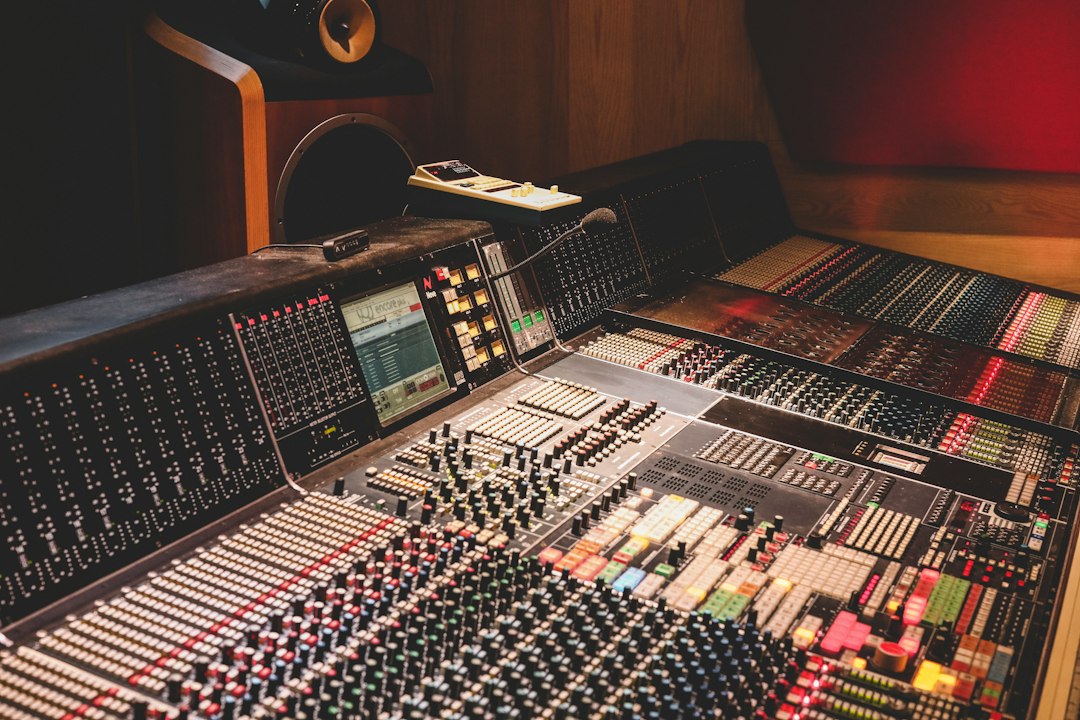
Here's how to think about it, what the terms of major tools say, and how to document your uses.
- What a Separation Tool Actually Does
- Two Rights in Each Song
- What the Tools' Terms Say
- Five Practical Cases for Musicians
- In the United States: Fair Use Is Not an Automatic Rule
- Four Questions Before Extracting
- Documenting Your Stems and Permissions
- What TuneLockr Does, and Does Not Do
- FAQ
What a Separation Tool Actually Does
A separation tool analyzes a stereo mix and extracts tracks: vocals, drums, bass, guitar, piano, and 'others.' Apple's guide for Logic Pro describes Stem Splitter as placing each extracted track in its own audio region.
Moises, LALAL.AI, and numerous plugins do the same thing online or in the DAW. The quality has greatly improved to the point where an extracted voice can be used in a production.
Legally, the key point is simple. The obtained stems are not a new creation: they are parts of the original recording. Extracting them means reproducing parts or all of that piece.
The page Copyright and AI Music reminds of the basics of copyright law applied to AI tools.
Two Rights in Each Song
Each recorded title carries at least two layers of rights. The composition and lyrics belong to authors, composers, and publishers. The recording belongs to the producer, often a label.
The US Copyright Office clearly states in its Circular 56A, revised in March 2021: sound recordings and compositions are two distinct works.
In France, Article L122-4 of the Intellectual Property Code labels as illegal any reproduction, full or partial, made without the author's consent. It also addresses adaptation, transformation, and arrangement.
Article L213-1 of the same code requires the phonogram producer's permission before any reproduction or public availability of their recording.
In practice, isolating a song's vocals and then publishing affects two rights holders: the song's authors and the master producer. An extraction for public use generally requires these two permissions.
The Code provides for limited exceptions. Their scope depends on the cases and is discussed with an intellectual property lawyer.
What the Tools' Terms Say
Usage terms never grant you rights over third-party music. They allocate responsibilities. Terms consulted on November 4, 2026.
| Tool | Rights Over Your Files | Liability | AI Training |
|---|---|---|---|
| Moises (terms dated May 5, 2026) | You retain your rights to the uploaded content and the outputs | Prohibited from uploading content you do not own or are not authorized for | No training without your written permission or opt-in |
| LALAL.AI (terms dated July 30, 2026) | Not specified in the terms reviewed | You are solely responsible for the use and distribution of sent and obtained files | Not specified in the terms reviewed |
| Logic Pro, Stem Splitter | Not addressed in the user guide reviewed | Not addressed in the guide reviewed | Not addressed in the guide reviewed |
Moises adds in its help center that you can commercially exploit your outputs, provided you have the necessary rights to all integrated elements. Their terms of use also prohibit redistributing the outputs as samples or loops.
LALAL.AI states appointing an agent to receive infringement notifications. Their terms clearly leave responsibility to the user.
Five Practical Cases of AI Stem Separation
The same tools are used for very different purposes. Here's how common situations appear, as examples.
Practicing on a Track
A bass player removes the bass from a funk track to play over it in their room. The files remain on their computer and are not shared.
This is the least exposed use in practice, but no general rule automatically makes it lawful everywhere. Don't share these stems, even with your band.
Publishing a Cover Video
A drummer publishes a video playing over the drumless track of a known song. Here, the publication changes everything: the original recording is communicated to the public.
The rules of video platforms and rights holder agreements vary. Check the platform's terms and, for regular use, request permission. Our page AI Cover of a Song details the cover issue.
Making a Remix
A DJ isolates a cappella from a track for a remix they want to release. Without agreements from the authors and the producer, the commercial release is risky.
The safe route is to request official stems or participate in a remix contest organized by the label, which sets usage conditions in writing.
Selling a Beat with an Extracted Voice
A beatmaker extracts a sung phrase from a soul classic to place it in a track sold online. It's a sample, requiring two licenses: composition and master.
The AI tool doesn't change this logic. It only makes the extraction cleaner than equalizer filtering.
Retrieving Tracks from Your Own Songs
A songwriter has lost the multitracks of a 2014 song and wants to remix it. If they own the composition and the master, AI stem separation is a simple restoration tool.
If a label owns the master, review your contract before any new release. The same goes for a studio restoring a client's archive: request a written agreement.
In the United States: Fair Use Is Not an Automatic Rule
It's often said that an 'educational' use or 'few seconds' falls under fair use. The page Fair Use Index of the US Copyright Office says otherwise: courts examine each case without a formula setting an allowed duration or percentage.
Four factors are weighed: the purpose of use, the nature of the work, the amount taken, and the effect on the work's market.
The Copyright Office page for musicians adds that there is no minimum duration usable without permission. An isolated voice reused in a commercial track greatly affects the last factor.
For a project intended to be broadcast or sold, fair use remains a possible defense, not prior permission.
Four Questions Before Extracting
Before starting extraction, four questions often suffice to assess your risk. They apply to a commercial title as well as an old recording found in an attic.
| Question | If the answer is yes | If the answer is no |
|---|---|---|
| Are you the author and producer of the track? | You are basically working on your own material | Identify the holders of the composition and master |
| Will the stems leave your computer? | Distribution or sharing: permission is generally necessary | Personal use, lower risk in practice |
| Will the result be sold or monetized? | You need written licenses for each layer of rights | Be cautious if the result is public |
| Do official stems exist? | Prefer them: they come with clear conditions | Ask the label or publisher before extracting |
Example: a guitar teacher wants to prepare backing tracks for their students. If they send them to twenty people, it is no longer purely personal use. They should choose their own compositions or tracks already offered under a license.
Documenting Your Stems and Permissions
Whether you're working on your own tracks or someone else's, keep a clear record of what you did and what you were allowed to do.
- Keep the source recording and note its origin: your master, official stems, a file provided by the label.
- Archive every written permission: label email, remix contract, contest rules.
- Submit your remix or new version to date your own work.
- If you publish your stems for other musicians, set the allowed uses in a written license.
- Note the tool used and the date of separation in the project folder.
In terms of licenses, TuneLockr allows you to offer your own works under a free or paid license, with AI permissions "AI Training" and "AI Generation." This way, you can allow a remix while refusing training.
See the page music license and artificial intelligence and the comparison of AI music generators for commercial use.
What TuneLockr Does, and Does Not Do
TuneLockr allows you to submit a file version: stem, mix, lyrics, or sheet music. The submission associates a date, a SHA-256 fingerprint, and the deposit information with this version, along with a certificate.
This certificate helps establish a timeline and can be kept among useful items in case of a dispute. It does not, by itself, determine the definitive ownership of rights.
- TuneLockr does: date your versions and remixes, offer licenses with AI permissions (Creator and Pro plans), share a file by free private link.
- TuneLockr does not: give you rights over someone else's track, validate a use, replace SACEM or a lawyer.
- Monitoring presents signals to examine. It does not automatically spot a music plagiarism.
The first filing is offered without a credit card. This information is general and does not constitute individualized legal advice.
FAQ
Is AI stem separation legal?
Using the tool is not, in itself, the problem. It's the usage that counts: on your tracks, generally no issue; on someone else's track, distribution or sale usually requires the authors' and producer's consent.
Do the extracted stems belong to me if the tool says so?
No. When Moises indicates you retain your rights on outputs, it refers to the relationship between you and Moises. The rights of the authors and the producer of the original track remain intact.
Can I sell a remix made with AI stem separation?
Only with the consent of the composition and master holders, or with official stems provided under a license. Otherwise, keep the remix for personal use.
And for a DJ set in a club?
The venue's broadcast permissions don't necessarily cover an edit you made yourself from extracted stems. Check with the venue and SACEM before playing it.