
Which work?
The licence is tied to a specific creation in your catalogue.
Allow a third party to use your music within a specific context: which track, what use, for how long, in which territory and at what price. For free or for a fee.
You remain the rights holder. You simply allow a person or organisation to use your music under set conditions.
The licence is tied to a specific creation in your catalogue.
Clearly define what the licensee is allowed to do.
Frame the authorisation with a duration suited to the project.
Limit or extend the geographical area of usage.
A licence can be free or come with a fee.
Clearly identify the beneficiary of the authorisation.
This is precisely why TuneLockr separates licensing logic from simple monetisation.
Permission may be free of charge for a specific project, whilst another licence may be paid for commercial use.
Example: you authorise a filmmaker to use your track in a student short film.
Example: a brand uses your track in a campaign broadcast on social media.
Short film, documentary, branded content or audiovisual production.
Instagram, TikTok, YouTube or other digital content.
Digital campaign, audiovisual advertising or brand communication.
Music integrated into an experience, a game, or an app.
Set the conditions for use, allowing or prohibiting certain transformations.
A licence can be tailored to a specific project and its requirements.
A licence is built around your work and the specific use you wish to allow.
Create a licence →Conditions associated with this licence.
Saying 'you can use my track' leaves many questions unanswered: where, for how long, in what context, and with what limits?
The licence helps to maintain a framework around the permission given.
A licence concerns a specific work. TuneLockr also allows you to register the creation, generate its fingerprint, timestamp it, and link it to your co-creators.
Discover TuneLockr protection →The licence becomes the bridge between proof of creation and its exploitation.
Register your work, add your co-creators, and create your proof.
Protect my music →Authorise use according to your own terms.
You are hereTurn some licences into paid uses.
Monetise my music → 04 · MONITORFind signals and compare them with known licences.
Coming soonCreate proof before you start granting usage rights.
Discover → MONETISATIONLink a payment to certain licences.
Discover → MONITORINGThe future link between detection and known licences.
Coming soon → AIGenerative AI, licences, rights, and training.
Read → GUIDEUnderstand good habits before publishing.
Read → HELPDeposits, licences, evidence and operation.
Bei der Schaffung, aber Registrierung empfohlen PRICINGCompare features and available plans.
See →A music licence is an authorisation allowing a third party to use a work under defined conditions.
Not necessarily. A licence can simply authorise certain uses while the other rights remain with the rights holder.
Yes. You can authorise free use with a licence set at a price of €0.
Yes. A licence can include payment when your music is used commercially or for a fee.
Discover monetisation →Yes. Duration is one of the elements that can be included in a music licence.
A licence can be defined for a specific area or territory that suits the relevant project.
Documenting the creation you are licensing beforehand helps keep clearer records about the relevant work.
Find out about protection →Licensing means authorising a use. Monetising means associating payment with that use. A licence can therefore exist without payment.
The intended logic is to be able to compare detected usages with known licences and authorisations. The musical monitoring is still shown as coming soon.
Discover tracking →The TuneLockr Help Centre brings together information about protection, licences and the other features of the platform.
Open the Help Centre →Choose the work, the use, the duration, the territory and the terms. Free or for payment.
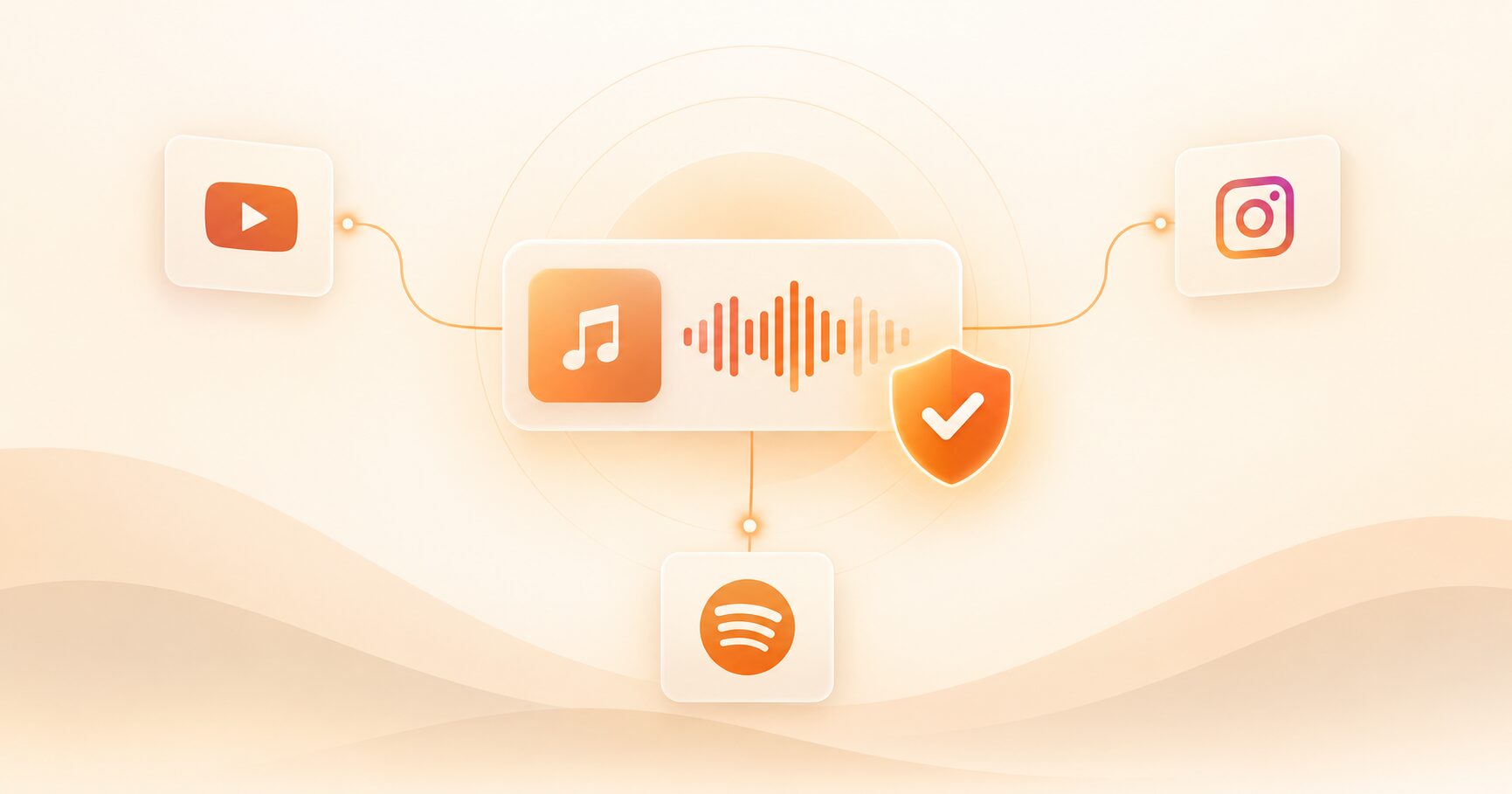
A music licence enables you to set out precisely how a work can be used: type of use, duration, territory, relevant media and financial terms. The World Intellectual Property Organization (WIPO) reminds us that using the same piece of music may require different permissions depending on the rights involved and the way the work is used. TuneLockr makes it possible to formalise these permissions to make authorised uses clearer for both the creator and licensee.
At an international level, the CISAC brings together authors' societies involved in managing rights and paying creators across more than a hundred countries. A TuneLockr licence does not replace collective management mechanisms when they apply: it allows you to clearly document the permissions granted directly in relation to a work.
Adding {{itemName}} to cart
Added {{itemName}} to cart