
Voice Cloning and Copyright:
Law Around the World
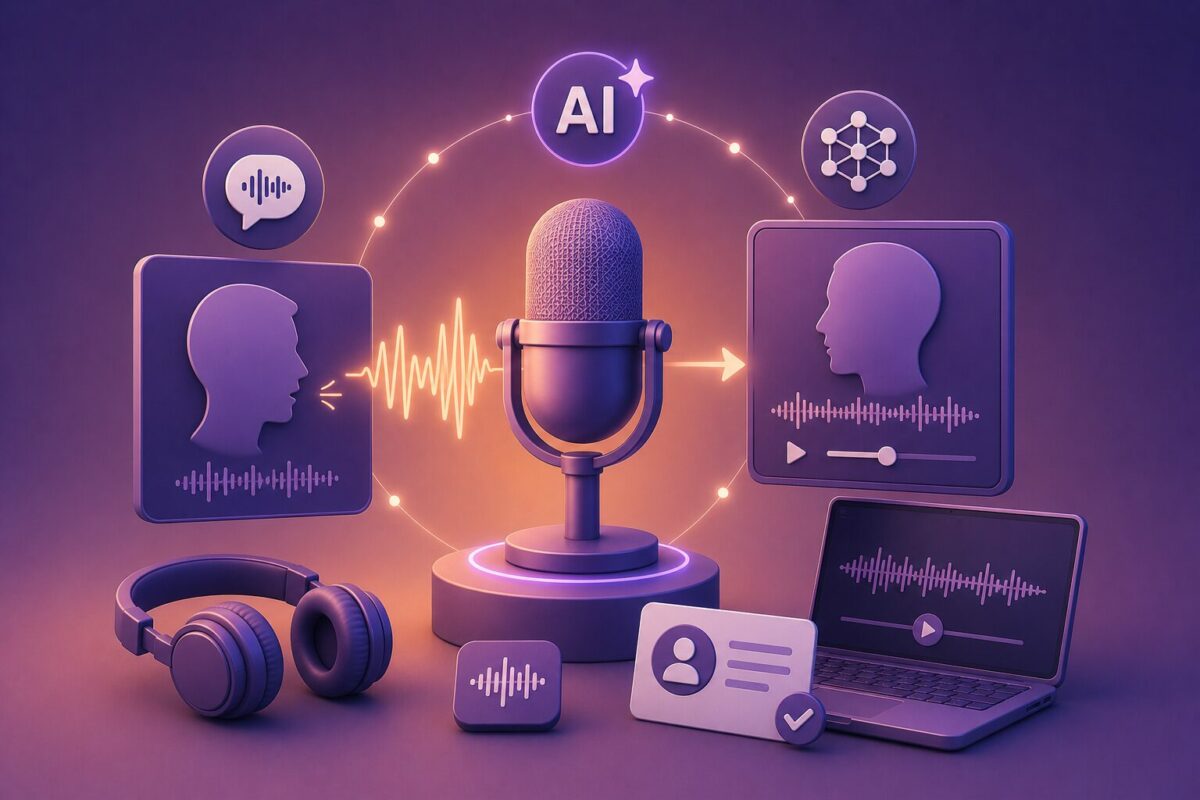
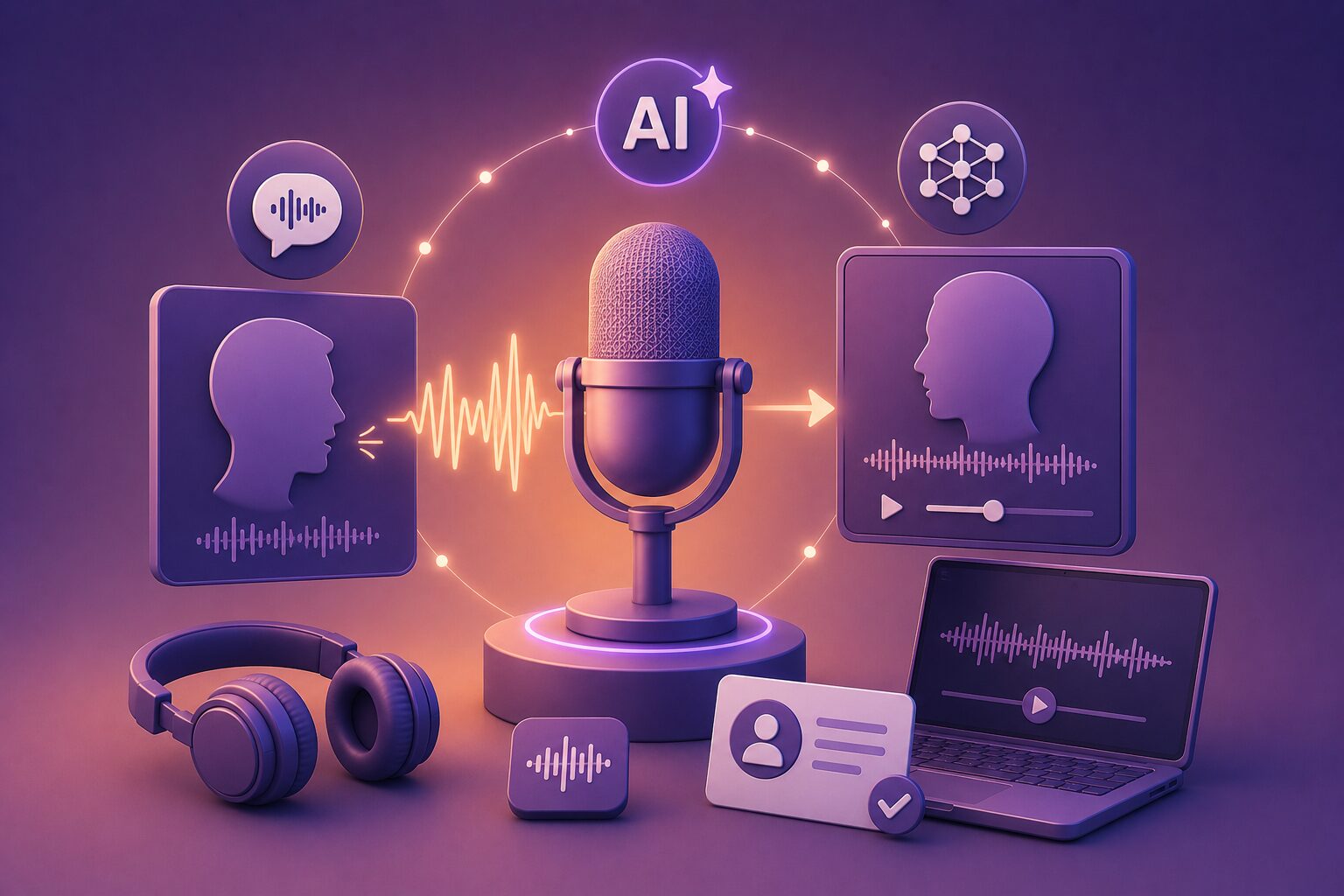
Today, just a few minutes of clean recording are enough for AI to convincingly replicate a voice's tone, prosody, and style. This guide compares how the United States, the European Union, and France are currently addressing the issue voice cloning and copyright — with real cases, not just theory.
Tezos Blockchain · eIDAS compliant · 170+ countries · 2 minutes
Why does voice cloning
change the nature of the risk
Until recently, the worst that could happen to a delivered voice recording was unauthorised redistribution. Now, the risk is that your voice itself becomes a reproducible raw material.
Just a few minutes needed
Modern vocal cloning tools can convincingly reproduce a person’s tone, prosody, and style of expression from just a few minutes of clean audio.
A voice saying things it never actually said
Once cloned, a voice can speak sentences the person never recorded, for brands or content they never approved — as in a viral 2023 case where a track mimicking Drake and The Weeknd spread online before being identified as AI-generated.
It’s not just a celebrity problem. Singers, voice actors, voice-over artists, podcasters — anyone whose voice exists online as a recording is a potential target for unauthorised cloning.
How different countries address the issue
plagiarism voice cloning and copyright
There is still no single global law — protection is a patchwork of national, even regional, rules. Here’s how the main frameworks compare.
| Jurisdiction | Key law / framework | What it covers |
|---|---|---|
| United States (Tennessee) | ELVIS Act (signed 21 March 2024; in effect 1 July 2024) | First American law explicitly protecting a person’s voice — real or simulated — as a property right against unauthorised AI cloning. Civil and criminal penalties. Applies only in Tennessee; similar bills exist in other states. |
| United States (federal) | NO AI FRAUD Act (proposed, not yet adopted) | Would create federal protections against AI-generated voice and likeness replicas without consent. Introduced in Congress but not yet enacted. |
| France | Neighbouring rights (Intellectual Property Code, Art. L.212-3) + SREN law | A performer’s voice is protected by neighbouring rights, which require prior authorisation for any recording and reproduction. The SREN law adds specific obligations for generative AI providers regarding the documentation of training data and obtaining consent, plus a rapid injunction mechanism. |
| European Union | European AI Regulation | From August 2025, imposes transparency obligations on synthetic content (including vocal deepfakes) for providers operating on the European market — a disclosure requirement, rather than a full property rights regime. |
| Germany | GEMA vs OpenAI (Munich court) | A German court ordered OpenAI to disclose the sources of its training data in a copyright case — a disclosure precedent relevant to future litigation on voice cloning, although the case itself concerned musical works rather than voice specifically. |
The common theme across all these frameworks: almost none grants copyright in a cloned voice to the person who created the clone. Most instead protect the owner of the original voice via neighbouring rights, image rights or personality rights — legal categories distinct from traditional copyright.
Are you translating this page? Replace or supplement this table with the relevant law of the target country (Spain, Italy, the German equivalent if it exists) rather than translating this table word-for-word — legal frameworks genuinely differ from one country to another.
Real cases shaping
the rules
This is not theoretical — these are real, documented disputes that demonstrate how the law is applied in practice.
At the start of 2026, a group of French dubbing actors — whose voices bring to life stars like Harrison Ford or Angelina Jolie in the French versions — sent formal notices to two American platforms, Fish Audio and VoiceDub, accusing them of cloning their voices without consent or payment. The group grew to 25 actors and secured the removal of 47 cloned voice models.
Important nuance: no financial compensation was paid, and no court made a formal ruling — the case was settled via formal notice, not through legal proceedings. It sets a practical rather than a legal precedent, but shows that collective action can work, even against foreign platforms.
🎭 Scarlett Johansson vs OpenAI
A highly publicised dispute over an AI voice deemed similar to the actress’s, used without her consent — this greatly helped bring the debate on AI voice cloning into the public spotlight.
🎙️ Matthew McConaughey’s Preventative Approach
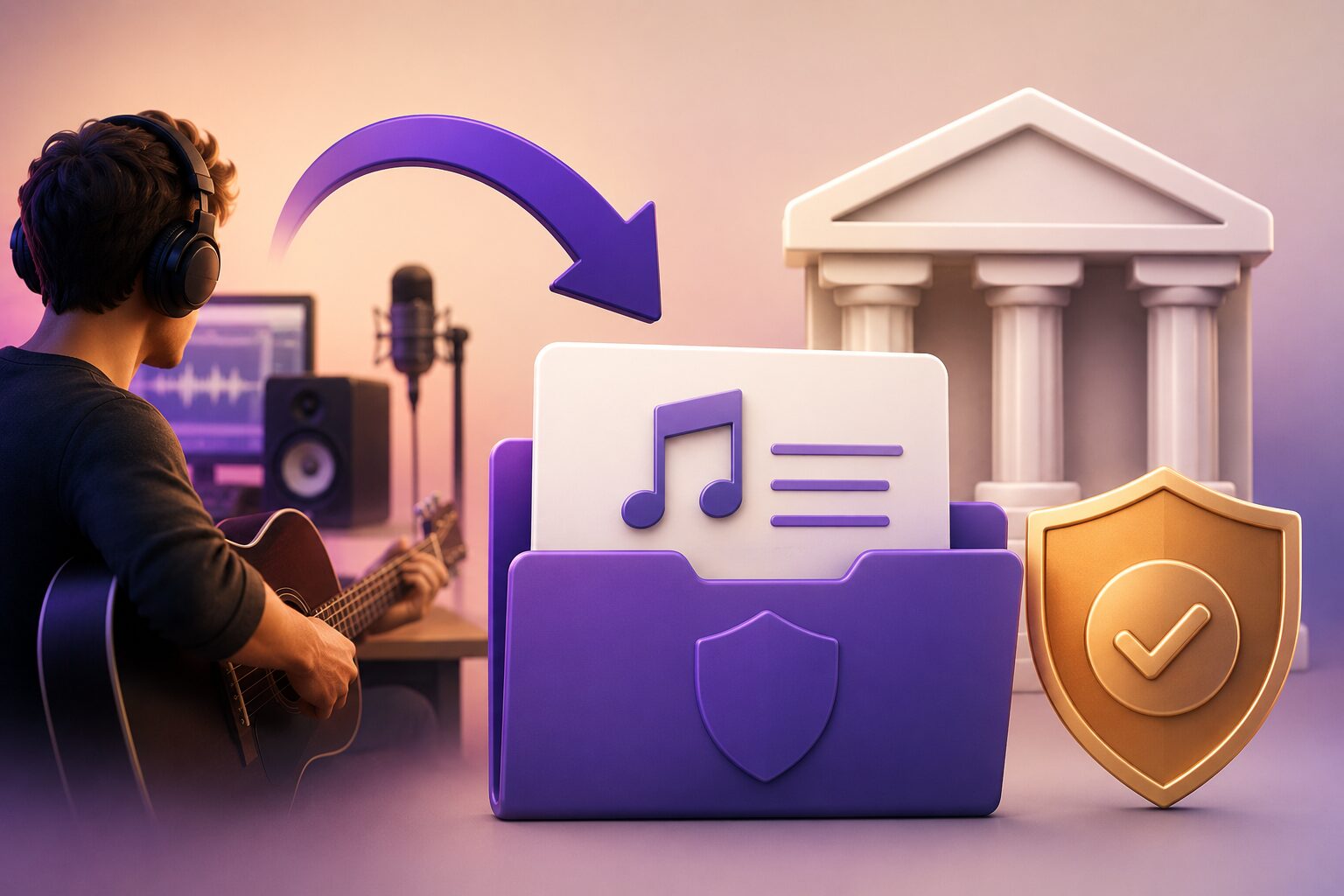
The actor had his voice registered with an American intellectual property institute as a preventative measure — an early example of an artist proactively documenting ownership of their voice before any dispute arose.
The real grey areas that
remain unresolved
It would be disingenuous to claim that everything is already settled — several genuine issues remain open, depending on the country.
| Question | Current state |
|---|---|
| Does public access to a recording justify its use for AI training? | Debated — varies from country to country and is the subject of ongoing legal disputes |
| Do national laws apply to foreign platforms targeting the local audience? | Generally yes, according to several legal analyses — if the service targets people in that country |
| Is a fully AI-generated voice, with no reference to a real person, eligible for copyright protection? | No — no identifiable human authorship |
| Has a court ever ruled on the merits of an AI voice cloning dispute? | Not yet, in most major jurisdictions to date |
This is a rapidly evolving area of law. New bills, European guidelines, and individual legal cases emerge every few months. Treat any precise legal statement on this subject as provisional, and check with a qualified lawyer in your country before relying on it in an actual dispute. If you're specifically wondering whether your own recordings have been used to train an AI model, see our dedicated guide: Has my music been used to train an AI?
Practical steps that work
wherever you are
While the law catches up with technology, here’s what you can do right now, wherever you are.
Carefully review the language in your contracts
Look for vague terms like 'derivative uses', 'AI training', 'synthesis', or 'future uses known or unknown' — these clauses can retroactively allow cloning you never intended to authorise.
Demand an explicit AI exclusion clause
A clear statement such as 'no use of these recordings for AI training or generation purposes is permitted without specific written agreement' has become essential protection for any professional voice.
Timestamp your original recordings before delivery
Before sending a voice file to a client, upload it to TuneLockr to obtain a timestamped certificate on the Tezos blockchain. This creates dated evidence of your original performance — useful if an unauthorised clone turns up later. Discover what constitutes strong evidence in our guide on proof of musical prior art.
Keep records of everything you deliver
A dated copy of every file you send is a key asset in case of a dispute — being able to prove exactly what you delivered and when is crucial. This matters just as much for the beats you send to other artists or the lyrics you share with a collaborator.
Know which collecting society is relevant to you
In many countries, a collective management organisation (like Adami in France) can act collectively on behalf of artists — a valuable support if you discover unauthorised use of your voice.
🎁 Protect your vocal recordings now
Timestamped certificate on Tezos blockchain, eIDAS compliant, valid for life — 1st deposit free.
Protect my recordings →Frequently asked questions about
voice cloning and copyright
It depends on consent and the country, but overall the answer is no—not without the concerned person's agreement. Most legal frameworks that directly address this subject (the ELVIS Act in Tennessee, the SREN law in France, and general rules regarding image rights or personality rights) require explicit authorisation before cloning and commercially exploiting someone's voice. An entirely AI-generated voice, with no reference to an identifiable real person, is treated differently and is generally not protected by copyright.
The ELVIS Act (Ensuring Likeness Voice and Image Security Act) is a law in the state of Tennessee, signed on 21 March 2024 and coming into force on 1 July 2024, which explicitly protects an individual's voice as a property right against unauthorised AI cloning. It was the first US law specifically targeting AI vocal cloning, with civil and criminal penalties. It only applies in Tennessee, although similar bills have been introduced in other states.
No. If the cloned voice reproduces an identifiable real person, the person who created the clone does not become its owner—in general, it is the person whose voice has been cloned who retains the rights, through image rights, personality rights, or neighbouring rights depending on the country. Creating an unauthorised clone does not create any new rights for its creator; on the contrary, it can create legal liability.
At the start of 2026, a group of French voice actors served formal notices to two American platforms, Fish Audio and VoiceDub, accusing them of having cloned their voices without consent or payment. The group grew to 25 actors and succeeded in having 47 cloned voice models removed from these platforms. No financial compensation was paid and no court decision was issued — the matter was settled through formal notice, not by trial — but it created an important practical precedent for the profession.
Carefully reread your contracts for vague terms like “derivative uses”, “AI training” or “future uses known or unknown” before signing. Keep a dated proof of your original recordings before sharing or delivering them. Demand a clause explicitly excluding AI training or synthesis unless there is a separate written agreement. If you discover unauthorised use of your voice, gather evidence and consult a lawyer or the relevant rights management organisation in your country. Start for free →
No, there is no single worldwide law. Protection currently consists of a patchwork of national, or even regional, rules: the ELVIS Act in Tennessee (USA), the SREN law and neighbouring rights in France, transparency obligations in the European AI Act, and personality rights or image rights frameworks elsewhere. This is a fast-evolving area of law, with very different rules from one country to another.
🔐 Your voice deserves
evidence dated and verifiable.
Before you deliver a recording, before you share it — upload it to TuneLockr and keep a time-stamped proof you can rely on. The first deposit is free, no credit card required.
2 minutes · No credit card · Lifetime evidence · 170+ countries
Related resources
Other guides on AI and protecting your creations, organised by theme.
AI & Copyright Cluster
Has my music been used to train an AI?
The lawsuits, and how to verify.
Read →AI Music Copyright
Can you own an AI-generated song?
Read →Essential protection guides
How to protect its music
Complete guide 2026.
Read →Proof of musical prior art
What makes strong evidence.
Read →Plagiarism musical
How to prove your music belongs to you.
Read →How to protect a beat
Producer's guide.
Read →Protecting song lyrics
Comprehensive guide for authors.
Read →Comparisons & products
SACEM alternative
TuneLockr vs SACEM vs Soleau.
Read →TuneLockr pricing
All available offers.
See →Start for free
First deposit free.
Start →Sources and official references
🇺🇸 United States
🇫🇷 France
🇪🇺 European Union
This article is for informational purposes only and does not constitute legal advice. The law regarding voice cloning varies considerably from country to country and is evolving rapidly. Consult a qualified lawyer in your country before relying on this content for any specific situation.